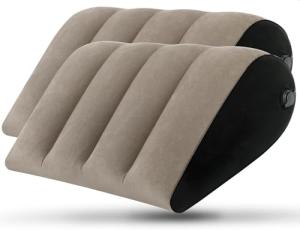
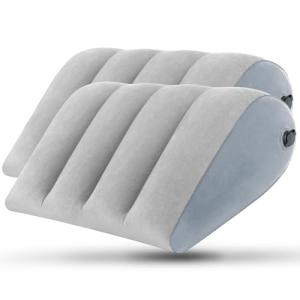
What Are Wedges & Body Positioners?
At first glance, a wedge or body positioner might look like a simple piece of shaped foam. But anyone who has spent time caring for a bedridden patient, recovering from surgery, or managing a chronic condition knows that the right positioning tool can make an enormous difference — in comfort, in safety, and in outcomes.
Wedges and body positioners are specially shaped supports designed to hold the body — or specific parts of it — in a stable, therapeutic position. Unlike a regular pillow that flattens and shifts through the night, these products are engineered to maintain a consistent angle and form over time. They come in dozens of shapes and sizes, built for everything from simple leg elevation after a long day to preventing serious pressure injuries in long-term care settings.
Whether you're a caregiver working in a hospital, a nurse managing a home care patient, or someone looking for better sleep and pain relief, there is almost certainly a wedge or positioner built for your specific situation.
Why Positioning Matters More Than You Think
The human body is not designed to stay in one place for long. When we're healthy and mobile, we shift, stretch, and roll throughout the day and night without even thinking about it. These tiny movements redistribute pressure, improve circulation, and keep joints from stiffening.
For people who can't move freely — due to illness, injury, surgery recovery, paralysis, or age-related frailty — that natural redistribution stops happening. Pressure builds on bony prominences like the sacrum, heels, hips, and ankles. Blood flow to the skin decreases. Tissue begins to break down. The result can be pressure injuries (also called pressure ulcers or bedsores) that are painful, slow to heal, and dangerous.
This is why wedges and body positioners exist. They work by offloading high-pressure zones, redistributing bodyweight across a larger surface area, and keeping vulnerable body parts properly aligned. A well-placed wedge doesn't just improve comfort — it actively reduces the risk of skin breakdown, joint contracture, nerve compression, and secondary complications from poor posture.
Beyond the clinical setting, these tools have a meaningful role in everyday life too. People recovering from hip or knee surgery, pregnant women managing positional discomfort, individuals with acid reflux or sleep apnea, and anyone dealing with chronic back or sciatic pain can all benefit from the right support in the right place.
The Different Types: What's in This Category
Bed Wedges
Bed wedges are angled foam supports used to elevate specific parts of the body during rest or sleep. They typically range from around 7 to 12 inches in height and come in angles of 30, 45, or even steeper inclines depending on the application.
An upper-body bed wedge placed under the head and torso can help manage acid reflux, respiratory conditions, and post-surgical recovery from chest or abdominal procedures. Raising the upper body even slightly reduces the likelihood of stomach acid traveling upward and makes breathing easier for people with certain lung or heart conditions.
Leg elevation wedges serve a different purpose — they're placed under the calves and feet to lift the lower limbs, reduce swelling, improve venous return, and take pressure off the heels. This is particularly important for patients at risk of heel pressure injuries, which are among the most common and difficult-to-treat wound types in bedridden individuals.
Some bed wedges have a convoluted (egg-crate) surface rather than a flat top. This contouring redistributes pressure even further and helps reduce moisture buildup against the skin — both factors in preventing skin breakdown.
Body Positioning Wedges (Lateral/Turn Wedges)
These are the workhorses of patient care. Lateral positioning wedges — sometimes called turn wedges or side-lying supports — are designed to hold a patient in a stable side-lying or tilted position. This is essential for patients who cannot reposition themselves and are on turning schedules (typically repositioned every two hours) to prevent sacral and hip pressure injuries.
A proper lateral wedge holds the patient at a consistent 30-degree angle off the mattress — the tilt recommended by the National Pressure Injury Advisory Panel as optimal for pressure relief without creating new pressure points on the hip or trochanter. The challenge with ordinary pillows is that they compress and shift, leaving patients gradually rolling back onto vulnerable areas. A well-designed foam wedge maintains its shape and keeps the tilt consistent through the night.
Some advanced lateral positioners are contoured to lift both the back and hips simultaneously while carefully avoiding contact with the sensitive spine, sacrum, and coccyx — the very areas that are most at risk.
Spinal and Trunk Support Wedges
These wedges are used to support the lumbar spine, stabilize the trunk, and reduce pressure on the lower back. They're placed behind the back during side-lying rest or can be used under the thighs to create a pelvic tilt that reduces strain on the lumbar region. Nurses and therapists also use them to maintain alignment in patients who tend to roll or slump.
Many of these positioners double as useful tools during pregnancy, supporting the abdomen and reducing strain on the lower back and hips when sleeping on one's side.
Knee and Leg Positioners
Keeping the knees and ankles from pressing directly against each other during side-lying is more important than most people realize. Sustained bony-on-bony contact between the knees or ankles can cause pressure injuries just as surely as lying on a hard surface. Knee and leg spacer wedges — sometimes cylindrical, sometimes contoured — are placed between the legs to maintain separation and proper joint alignment.
These products are common in rehabilitation, orthopedic recovery, and long-term care. They're also used post-surgically, for example after hip replacements, where maintaining correct leg position helps prevent dislocation during the healing period.
Specialty and Multi-Angle Wedges
Not all bodies and clinical situations fit a standard mold. Multi-angle wedges — which can be stacked, flipped, or configured to provide 30, 60, or 90 degrees of support — give caregivers flexibility to meet different positioning needs with a single product. These are popular in imaging departments (where precise body angles are needed for X-ray, CT, and MRI procedures), in operating rooms, and in rehabilitation settings where therapeutic positioning changes frequently.
Materials and Construction: What to Look For
The quality of a wedge or positioner comes down to two main factors: the foam inside and the cover outside.
Foam density and type determine how long a product maintains its shape and how well it redistributes pressure. High-density polyurethane foam holds its form over months of daily use and provides firm, consistent support. Lower-density options feel softer but compress more quickly and lose their therapeutic benefit faster. Some premium positioners use semi-rigid foam that combines firmness with a degree of contour-conforming, which is especially useful in clinical settings.
Covers play a critical role in infection control and user comfort. In healthcare settings, covers need to be either disposable or cleanable. Look for:
- Vinyl or upholstered bacteriostatic covers that can be wiped clean with standard disinfectants — these are the standard in hospitals and care facilities
- Waterproof or fluid-resistant materials that prevent contamination of the foam core
- Breathable knit fabrics with moisture-resistant coatings that keep skin dry without trapping heat
- Removable zip covers for home use, where machine washing is practical
- Non-skid bases that prevent the positioner from migrating during the night
Many facilities use single-patient-use uncovered foam wedges as an economical, infection-safe option — they can be discarded if soiled, eliminating any risk of cross-contamination. Reusable options with durable covers are more cost-effective for long-term care when proper cleaning protocols are followed.
Who Uses These Products
Healthcare Professionals
Nurses, wound care specialists, physical therapists, and occupational therapists rely on positioning wedges as standard tools of the trade. In acute care settings, wedges are used to implement turning protocols, manage existing pressure wounds, and support patients who are sedated, paralyzed, or otherwise unable to self-reposition. In rehabilitation, they assist with therapeutic exercises and postural training. In imaging, they ensure accurate and reproducible patient positioning for diagnostic procedures.
Long-Term and Home Care
For patients receiving care at home — elderly individuals, those with spinal cord injuries, stroke survivors, or people with degenerative neurological conditions — body positioners and wedges are often indispensable daily-use items. Family caregivers and professional home care aides use them to reduce the physical burden of repositioning, maintain patient comfort, and prevent the development of pressure wounds that would otherwise require clinic visits and wound care treatment.
Post-Surgical Recovery
After orthopedic, abdominal, or cardiac surgery, positioning is often a clinical prescription, not an option. Leg elevation wedges reduce swelling and support healing after knee or hip procedures. Arm positioners and abduction wedges hold the shoulder in the correct position after rotator cuff surgery. Chest elevation wedges reduce strain on healing incisions and support breathing.
Everyday Comfort and Sleep
Wedge pillows have a significant following outside the clinical world. People with chronic back pain, sciatica, GERD, sleep apnea, snoring, poor circulation, or pregnancy-related discomfort use bed wedges to improve their quality of rest. These consumer-oriented products tend to use similar foam constructions to their clinical counterparts, though often with more emphasis on aesthetics and washability.
Choosing the Right Product
With so many shapes, angles, and materials available, the right choice depends on the specific need:
For pressure injury prevention in bed-bound patients, a firm lateral positioning wedge at a 30-degree angle is the clinical standard. Look for non-skid bases, fluid-resistant covers, and a contoured design that avoids sacral contact.
For heel offloading, a dedicated heel elevation pillow or lower leg bolster is more effective than a general bed wedge, as it floats the entire heel off the mattress surface.
For upper body elevation related to reflux or respiratory conditions, a long-angle bed wedge with a gradual incline is more comfortable than a steep one — it supports the entire upper body rather than creating a sharp bend at the waist.
For post-surgical leg positioning, look for wedges sized appropriately for the patient and the specific joint involved, with a firm enough foam to maintain the angle without compressing under body weight.
For caregiver convenience, multi-patient reusable wedges with wipe-clean covers are the practical choice for care facilities. For single-patient or home use, disposable covers or zip-removable washable covers offer flexibility.
A Simple Tool With Serious Impact
There's nothing complicated about a wedge. It doesn't require power, calibration, or a learning curve. But in the right hands, placed in the right position at the right time, a good body positioner changes the entire equation of patient care. It keeps pressure off skin that can't afford any more. It holds joints where they need to be. It gives caregivers a reliable ally in the ongoing task of keeping people comfortable and safe.
Whether you're equipping a hospital ward, setting up a home care environment, or simply looking for something to make sleep more restful, this category has a solution that will do exactly what it promises — keep the body where it needs to be.