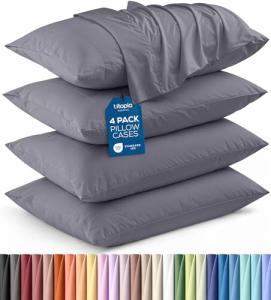
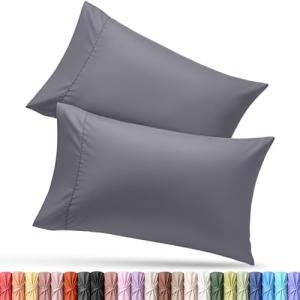
Why Your Pillowcase Matters More Than You Think
Pillowcases do a lot of quiet work. They protect your pillow from sweat, oils, and dust mites — extending the life of the pillow itself. They regulate temperature at your head and neck, which plays a real role in how quickly you fall asleep and how deeply you stay there. And for people who care about their skin or hair, the fabric you sleep on for thousands of hours a year is far from a trivial choice.
A rough or low-quality pillowcase creates friction. That friction pulls at facial skin and tangles hair over the course of a night. It absorbs moisture — both from your face and from any skincare you applied before bed. A well-chosen pillowcase, on the other hand, is smooth enough to reduce irritation, breathable enough to stay cool, and absorbent (or non-absorbent) in exactly the right way for your needs.
Beyond all that: a beautiful pillowcase makes your bed look finished. It's one of the simplest ways to elevate the entire feel of a bedroom.
Pillowcase Materials — The Most Important Decision
The material is where you should spend most of your attention. Thread counts and weaves matter, but they matter within a material category. Comparing thread counts across different fabrics is like comparing apples to oranges — a 300-thread-count percale cotton and a 300-thread-count sateen are completely different experiences.
Cotton
Cotton is the most popular pillowcase material in the world, and with good reason. It's breathable, durable, easy to wash, gets softer with each launder, and suits a wide range of climates. Within cotton, though, there are meaningful distinctions.
Egyptian cotton is widely regarded as the gold standard. It comes from long-staple cotton fibres grown along the Nile, which produce a finer, stronger thread than shorter-staple varieties. The result is a fabric that feels smooth and luxurious right out of the packaging — and only improves over time. Genuine Egyptian cotton pillowcases are an investment, but they last for years and age beautifully.
Pima cotton (sometimes marketed under the Supima brand name for American-grown Pima) is a close second. Also long-staple, it shares many of Egyptian cotton's qualities — silky feel, strong fibre, excellent longevity — at a slightly more accessible price point.
Standard cotton covers a wide range, from the serviceable to the disappointing. Budget pillowcases are often made from short-staple cotton, which pills more quickly and doesn't have the same drape or softness. This isn't necessarily a deal-breaker for a guest room or a kids' bed, but it's worth knowing what you're getting.
Linen
Linen pillowcases have a devoted following, particularly among people who sleep warm. Linen is made from the flax plant, and its fibres are naturally hollow — which gives the fabric exceptional breathability and moisture-wicking ability. A linen pillowcase stays noticeably cooler than cotton on a warm night.
The trade-off is texture. Linen starts out fairly rough and takes several washes before it relaxes into that famous lived-in softness. If you're used to crisp, smooth cotton, the initial linen experience can be a surprise. But many people become fiercely loyal to linen after it breaks in — there's a casual, natural quality to it that cotton doesn't quite replicate.
Linen is also exceptionally durable. A quality linen pillowcase, cared for properly, can genuinely last decades.
Silk and Satin
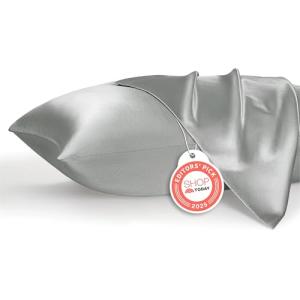
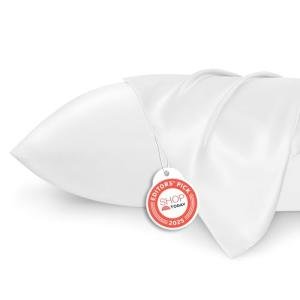
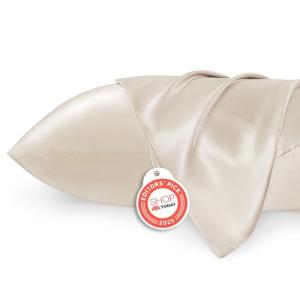
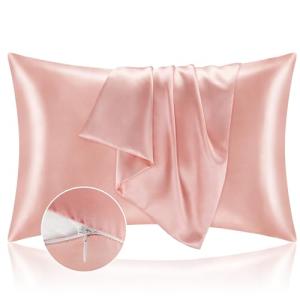
Silk pillowcases have become a genuine skincare and haircare staple. Natural silk — typically mulberry silk, rated by momme weight (look for 19–25 momme for a pillowcase with real substance) — is exceptionally smooth. It creates almost no friction, which means less overnight tugging at skin and less hair breakage or tangling. It also doesn't absorb moisture the way cotton does, so your skin stays more hydrated and your skincare products stay on your face rather than the pillow.
Silk is a temperature regulator — cool in summer, surprisingly warm in winter — and it's naturally hypoallergenic.
The downsides are price and care. Real silk pillowcases are expensive, and they require hand washing or a very gentle machine cycle. They're also delicate; sharp fingernails or rough handling will snag them.
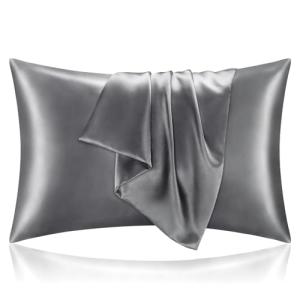
Satin is the affordable imitation. Polyester satin mimics silk's smoothness at a fraction of the cost and is much easier to care for. It won't have the same breathability or moisture regulation as real silk, but for people primarily interested in reducing hair friction, it does the job well.
Bamboo and Lyocell
Bamboo-derived fabrics — often sold as bamboo viscose or bamboo lyocell — have grown significantly in popularity. They're soft, often described as silkier than cotton, and have natural moisture-wicking properties. They tend to be cooler than standard cotton and work well for people who sweat during sleep.
Lyocell (the best-known version of which is branded Tencel) is made from wood pulp in a closed-loop process that's more environmentally considered than conventional cotton or viscose production. It has a beautiful drape and a smooth, slightly cool-to-the-touch feel. It's worth noting that bamboo and lyocell fabrics can require more careful laundering — high heat in the dryer can damage them.
Weave Types Explained
Once you've chosen a material, the weave determines how the fabric feels and behaves.
Percale
Percale is a plain, one-over-one-under weave that produces a crisp, matte fabric. It's cool to the touch and gets crisper with washing rather than softer — some people love this, others prefer something that mellows. Percale is the classic hotel-sheet weave: fresh, clean, and unfussy. It's particularly well-suited to warm sleepers or warmer climates.
Sateen
Sateen uses a weave that floats more threads on the surface, creating a smoother, slightly shiny finish. It has a warmer, more luxurious feel than percale and a subtle sheen. It's less durable than percale over many years of washing, and it can pill if the thread quality isn't high. But a good sateen pillowcase feels genuinely indulgent.
Twill
Twill weaves (think denim or flannel) produce a diagonal texture that's very durable and warm. Flannel pillowcases — made from a brushed twill cotton — are popular in colder climates. They're soft, cosy, and excellent at retaining warmth.
Thread Count — The Truth
Thread count refers to the number of threads per square inch of fabric, counting both horizontal (weft) and vertical (warp) threads. It's been heavily marketed as a quality indicator, but the picture is more complicated than it appears.
In general, for standard cotton, a thread count of 200–400 hits the sweet spot. Below 200, you'll often feel it — the fabric can feel thin and rough. Above 400, the returns diminish. Many very high thread counts (800, 1000, 1200) are achieved by twisting multiple thinner threads together and counting each thread separately — this inflates the number without improving the feel, and can actually reduce airflow.
For percale, you typically want 200–300. For sateen, 300–600 is reasonable. And thread count is essentially irrelevant for linen, silk, and bamboo, which are assessed by different measures (momme weight for silk, GSM for linen and bamboo).
The honest shortcut: buy from a brand that's transparent about its materials and origin, and ignore thread count as a standalone number.
Pillowcase Sizes and Fits
Standard, Queen, and King
Standard pillowcases (roughly 51 × 66 cm or 20 × 26 inches) fit standard and queen pillows with some extra fabric. Queen pillowcases (51 × 76 cm / 20 × 30 inches) give a neater fit on queen pillows. King pillowcases (51 × 92 cm / 20 × 36 inches) are for king pillows and are sometimes called super king in European sizing.
Oxford vs Housewife
This is a distinction that matters more for aesthetics than function. A housewife pillowcase (or plain pillowcase) fits closely to the pillow with no extra border. An Oxford pillowcase has a flat decorative border — typically 5–8 cm — that sits around the pillow, giving a more formal, hotel-like look. Oxford cases are a classic European styling that adds structure and visual weight to a bed.
Envelope vs Zipper Closure
The back closure affects how well the pillow stays inside. An envelope closure (where one flap overlaps another) is classic and works well for most uses. A zipper closure keeps the pillow completely contained — useful for people who move a lot in sleep or for decorative pillows that you don't want shifting.
Care, Washing, and Longevity
Most cotton, linen, and bamboo pillowcases can be machine washed at 40–60°C. Washing at 60°C is recommended periodically for hygiene — particularly if you're prone to acne, allergies, or simply want to kill off dust mites properly. Silk and delicate sateen need cooler temperatures (30°C or hand wash).
Avoid fabric softener on percale and linen — it coats the fibres and reduces breathability over time. White pillowcases can be occasionally washed at higher temperatures or with an oxygen-based whitener to keep them bright without damaging fibres the way chlorine bleach does.
Tumble dry on low or medium, or line dry. High heat damages almost every fabric type over time — it weakens fibres, causes shrinkage, and fades colour. Taking a little care with drying extends the life of a pillowcase significantly.
Good pillowcases, cared for properly, last three to five years for everyday use, and considerably longer for linens and high-quality cottons that are washed gently.
How to Choose the Right Pillowcase for You
A few simple questions narrow things down quickly:
Do you sleep warm? Go for percale cotton, linen, or bamboo. Avoid sateen and flannel, which trap more heat.
Do you have sensitive skin or care about hair health? Silk (or a quality polyester satin as a budget option) reduces friction and moisture absorption.
Do you want something that lasts for years and gets better with age? Linen or Egyptian cotton are the long-game choices.
Do you want that crisp, fresh hotel feeling? Percale with a thread count around 200–300 is exactly that.
Do you prefer something cosy and warm? Flannel or a higher-GSM linen in cool weather.
Is ease of care the priority? Standard cotton percale — wash at 60°C, tumble dry, iron if you feel like it.
Pillowcases are one of those purchases where the gap between a cheap option and a genuinely good one is felt every single night. That doesn't mean you need to spend a fortune — but it does mean it's worth thinking about material quality and honest construction over marketing language and inflated thread counts.
Look for brands that tell you where their cotton is grown, what their thread count actually means, and how the pillowcase is finished. Look for reinforced seams and clean stitching. And don't underestimate the simple pleasure of pulling back a bed with beautiful, well-chosen bedlinen at the end of a long day.
Sleep is a third of your life. Your pillowcase is there for all of it.