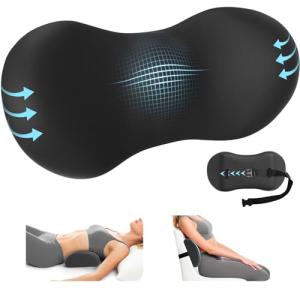
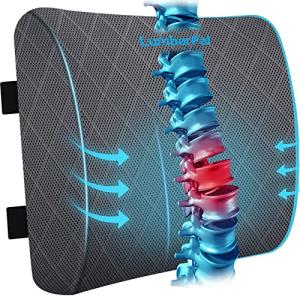

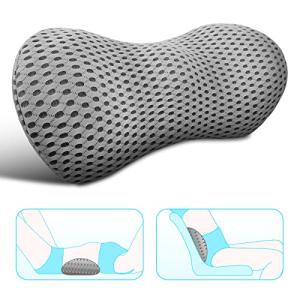
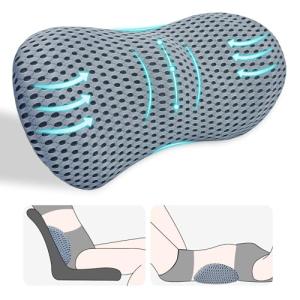
What Exactly Is a Lumbar Pillow?
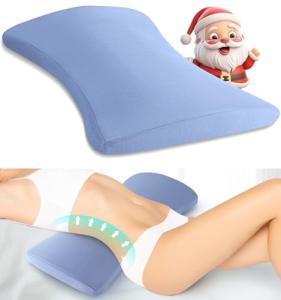
A lumbar pillow is a cushion specifically designed to support the lumbar spine — the lower portion of your back that curves naturally inward. Unlike a regular decorative throw pillow, a lumbar pillow is shaped and positioned to maintain that natural curve rather than flatten it.
The name comes from the Latin lumbus, meaning loin. Your lumbar vertebrae — the five large bones at the base of your spine — carry a significant portion of your body weight every time you sit. When you slouch or lean against a flat surface, those vertebrae are forced out of alignment. Over time, that misalignment leads to muscle strain, disc pressure, and the kind of persistent, low-grade pain that becomes so familiar you almost stop noticing it.
A lumbar pillow gently nudges your lower back back into its natural position, reducing the strain on your muscles and joints. It's not a medical device. It's not a cure-all. But it's an incredibly effective and accessible tool for day-to-day comfort.
Who Actually Needs a Lumbar Pillow?
Short answer: almost everyone who sits for extended periods of time. But here are the people who tend to benefit most:
Office workers and remote professionals spend hours in chairs that — even when ergonomically rated — rarely fit their body perfectly. A lumbar pillow bridges that gap, quite literally. It compensates for chairs that sit too deep or have backrests that don't align with your natural curve.
Drivers are another group that consistently reports significant relief from lumbar support. Car seats are engineered for average bodies, and if your back doesn't fit that average, long drives become ordeals. A good lumbar pillow transforms a two-hour commute from something you brace yourself for into something you barely notice.
People recovering from back injuries or managing chronic pain often find lumbar pillows helpful as part of a broader management strategy. They're not a substitute for medical care, but they can meaningfully reduce the amount of daily discomfort that comes from routine sitting.
Frequent travelers — whether on planes, trains, or buses — deal with seats designed for efficiency, not comfort. A portable lumbar pillow can be the difference between arriving at your destination feeling rested or feeling wrecked.
And honestly? Even people without any existing back issues benefit. Prevention is always easier than recovery.
The Different Types of Lumbar Pillows
Not all lumbar pillows are the same, and part of choosing the right one is understanding what options exist.
Memory Foam Lumbar Pillows
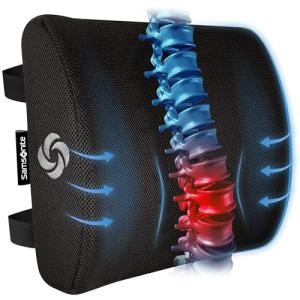
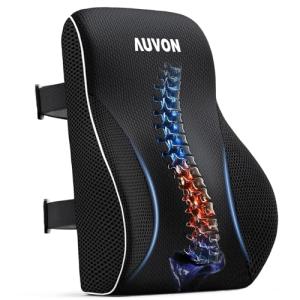
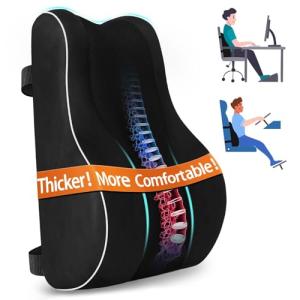
Memory foam is probably the most popular filling material for lumbar pillows, and for good reason. It molds to the shape of your back, distributing pressure evenly and providing personalized support. It responds to body heat, which means it gets slightly softer as you sit, conforming more precisely to your unique contours.
The trade-off? Memory foam can retain heat, which may feel uncomfortable in warmer weather. It also takes a moment to "recover" its shape when you stand up. But for many people, the contouring support more than compensates for these minor drawbacks.
Adjustable Lumbar Pillows
These pillows are designed with customization in mind — they often feature removable inserts, adjustable straps, or inflatable chambers that let you dial in exactly how much support you want. If you've ever struggled to find a one-size-fits-all lumbar pillow that actually fits, adjustable versions are worth exploring.
Roll Pillows
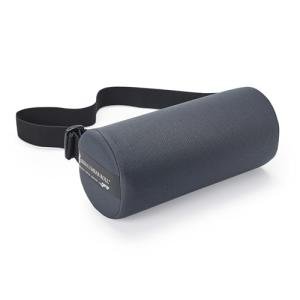
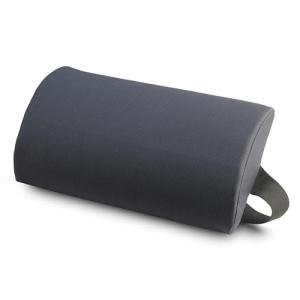
Cylindrical lumbar rolls have been used in physical therapy and ergonomic settings for decades. They're simple, often firm, and excellent at maintaining consistent support at a single focal point on your lower back. They're less forgiving than memory foam options, but some people — particularly those who've been directed by a physiotherapist — swear by them.
Decorative Lumbar Pillows
Here's where form meets function — or sometimes, where form overshadows function entirely. The classic lumbar pillow in interior design is rectangular, smaller than a standard square throw pillow, and used as much for visual layering on a sofa or bed as for any practical support purpose. These exist on a wide spectrum: some genuinely provide support, others are purely aesthetic, and many sit somewhere in between.
If you're buying for your living room and want something that looks beautiful while still offering some back support when you're lounging, there are excellent options that deliver both.
Travel Lumbar Pillows
Compact, lightweight, and often designed to attach easily to airline seats or car headrests, travel lumbar pillows prioritize portability. Many fold flat or compress for easy packing. They won't offer the same depth of support as a full-sized office lumbar cushion, but they're dramatically better than nothing on a long flight.
What to Look for When Choosing a Lumbar Pillow
With so many options available, it helps to have a framework for evaluation. Here are the factors that actually matter:
Firmness
This is one of the most personal variables. Some people need firm support — particularly those with more pronounced natural curves or those using the pillow during activities that require stable positioning, like driving. Others prefer a softer, more cradling feel. When in doubt, medium-firm is usually a safe starting point.
Size and Shape
A lumbar pillow that's too tall will push your upper back forward. One that's too narrow won't support the full width of your lower back. Most lumbar pillows are designed to be roughly the width of an average torso, but your mileage may vary. Pay attention to dimensions, not just the product photo.
Cover Material
If you're going to be using a lumbar pillow for hours at a time, the cover fabric matters a lot. Breathable materials like cotton, mesh, or bamboo-derived fabrics help prevent overheating. Look for covers that are removable and washable — backs sweat, and a pillow you can't clean is a pillow you'll eventually stop using.
Attachment System
For office chairs, car seats, or anything with a back that you need the pillow to stay put on, look for an adjustable strap or elastic attachment band. A lumbar pillow that slides around defeats its own purpose. The strap should be long enough to fit your chair but secure enough that the pillow doesn't drift down over the course of a workday.
Durability
Memory foam in particular has a tendency to flatten over time. Look for high-density foam (usually measured in pounds per cubic foot — higher density generally means more durability) and read reviews with an eye toward long-term performance. A pillow that feels perfect for the first month and then collapses isn't worth the savings.
How to Use a Lumbar Pillow Properly
Buying the right pillow is only half the equation. Placement is crucial.
The pillow should sit at the curve of your lower back — roughly between your waistline and the bottom of your ribcage. It should feel like it's gently pressing your back forward into its natural curve, not pushing you into an unnatural arch.
Your feet should rest flat on the floor (or a footrest). Your hips should be pushed back into the chair. Your shoulders should be relaxed, not rounded forward. The lumbar pillow supports all of this by keeping the base of your spine in a position that allows the rest of your posture to stack correctly.
It's also worth remembering that no pillow — however good — is a substitute for movement. Take breaks. Stand up. Stretch. The goal of a lumbar pillow is to make sitting better, not to make sitting indefinitely feasible.
Lumbar Pillows for the Home: Beyond the Office Chair
One of the things that surprises people is how much they end up reaching for their lumbar pillow outside of work. The sofa is a surprisingly common culprit for back pain — modern couches are often designed to look low and sprawling, which looks great in a showroom but is genuinely terrible for your posture.
Placing a lumbar pillow behind you when you're watching television, reading, or just relaxing can significantly reduce the ache that comes from slouching into a deep-seated sofa. The same applies to beds with upholstered headboards — if you spend time reading or working in bed with your back against the headboard, lumbar support makes a real difference.
Outdoor furniture is another category where lumbar pillows earn their keep. Garden chairs, patio furniture, and outdoor dining seats are almost never built with back support in mind. A weather-resistant lumbar pillow adds comfort and can make outdoor living genuinely relaxing rather than something you endure for an hour before retreating inside.
Style Matters Too
Comfort doesn't have to come at the expense of aesthetics. Lumbar pillows come in an enormous range of colors, fabrics, patterns, and textures — from simple, neutral tones that blend into any interior to bold prints and artisan textiles that become focal points in a room.
When choosing a lumbar pillow for a visible space like a living room or bedroom, think about scale and texture. A lumbar pillow's rectangular shape makes it a natural partner for larger square pillows — it sits in front of them on a sofa or bed and adds visual depth to an arrangement. Velvet lumbar pillows have had a long moment in interior design for good reason: the fabric catches light beautifully and adds a sense of richness without being ostentatious.
For a more casual, lived-in look, woven or textured fabrics work beautifully. For a clean, minimal aesthetic, a lumbar pillow in a single solid tone with a subtle texture is often more effective than a busy print.
A Small Change with Real Impact
There's something almost counterintuitive about how much difference a lumbar pillow can make. It's such a modest object — a cushion, essentially — and yet the cumulative effect of better-supported sitting adds up across days and weeks and years.
Back pain is one of the most common reasons people miss work, seek medical treatment, and report reduced quality of life. Not all of it is preventable, and not all of it can be addressed by a pillow. But a meaningful portion of everyday lower back discomfort comes simply from hours spent sitting without adequate support.
A lumbar pillow doesn't ask much of you. You place it, you sit, and it does its job. That's the appeal. In a world of complicated wellness routines and expensive interventions, the lumbar pillow is refreshingly simple — a small thing that does exactly what it promises.