
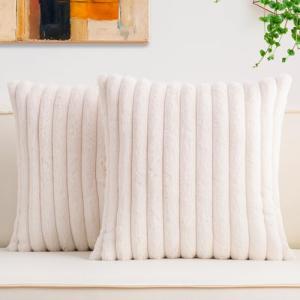
What Exactly Are Throw Pillow Covers?
A throw pillow cover (also called a pillow sham or decorative pillow cover) is a removable fabric shell designed to slip over a pillow insert. They're made to be decorative first and functional second. Unlike your standard sleeping pillowcase, which prioritizes softness and durability through hundreds of wash cycles, throw pillow covers are all about how they look and feel in a living space.
Most covers have a hidden zipper closure or an envelope-style back that keeps them looking clean and seamless from the front. The sizes are typically designed to fit standard pillow inserts: 18x18 inches and 20x20 inches are the most popular for square covers, while lumbar covers tend to run around 12x20 or 14x20 inches.
The beauty of the cover-and-insert system is simple economics: one set of pillow inserts, many sets of covers. You're not buying a whole new pillow every time the seasons change or your mood does.
Why Throw Pillow Covers Deserve More Attention
People often think of throw pillows as an afterthought — something you toss on the sofa after everything else is done. But interior designers will tell you something different. Pillows are often one of the first things they choose, not the last, because they set the tone for everything else in the room.
Here's why they matter more than you might think:
They add softness and scale. A large, empty sofa can look cold and uninviting. The right pillow arrangement — layering different sizes, shapes, and textures — gives it warmth and visual weight. The same goes for beds. A bare duvet looks flat. Stack a few coordinating pillows in front and suddenly the whole bed looks styled.
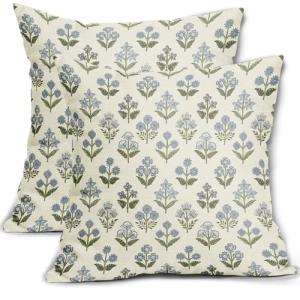
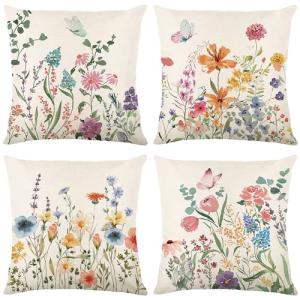
They introduce pattern without risk. Committing to a boldly patterned wallpaper or upholstered chair can feel terrifying. But a pair of geometric or floral pillow covers? Totally low stakes. If you end up hating it, you've spent $30 and you're back to neutral in about forty-five seconds.
They tie rooms together. If you're working with multiple colors in a space — say, a rust-orange accent chair, a teal rug, and cream walls — a pillow that pulls in all three of those tones can make the whole room feel intentionally designed rather than randomly assembled. Pillows are one of the easiest ways to create visual cohesion.
They're seasonal. Thick velvet covers in deep jewel tones for fall and winter. Light linen or cotton covers in soft neutrals and pastels for spring and summer. Swapping pillow covers is genuinely one of the most satisfying ways to mark the change of seasons in your home.
Materials — What to Look For and Why It Matters
The fabric of a pillow cover does a lot of work. It affects how the pillow looks, how it holds its shape, how it feels against your skin, and how well it holds up over time. Here's a breakdown of the most common materials and what makes each one right for different situations:
Cotton and Canvas
Cotton covers are a go-to for good reason. They're breathable, easy to wash, hold printed designs beautifully, and tend to be more affordable than natural luxury fibers. Canvas-weight cotton is especially durable and works well in high-traffic areas — family rooms, kids' spaces, outdoor-adjacent spots. Printed cotton covers are also where you'll find the most variety in terms of patterns and colors, since the fabric takes dye exceptionally well.
Linen and Linen Blends
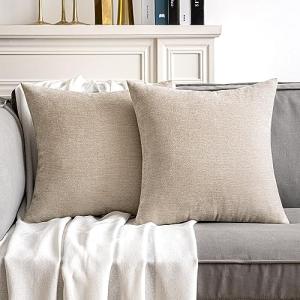
If cotton is reliable, linen is characterful. It has a slightly rough, textured feel that softens beautifully with washing, and it carries that effortless, lived-in quality that's been all over interior design for years. Linen covers work especially well in natural, Scandinavian-inspired, or coastal interiors. They wrinkle easily — but honestly, on a decorative pillow, that wrinkle reads as intentional texture rather than sloppiness.
Velvet
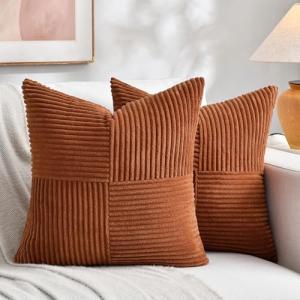
Velvet covers bring instant luxury. The way velvet catches and reflects light gives a pillow a depth that flat fabrics simply can't match, which is why velvet pillows tend to look especially good in photographs. They work beautifully in jewel tones — deep emerald, sapphire blue, burgundy, burnt orange — and they're incredibly popular for autumn and winter decorating. Modern velvet is often a polyester or cotton-poly blend, which makes it more durable and easier to care for than traditional velvet.
Faux Fur and Sherpa
For the colder months, nothing beats the tactile pleasure of a fuzzy pillow. Faux fur and sherpa covers add serious coziness to a sofa or reading chair. They're not right for every room — in a very minimal or modern space they can feel out of place — but in a warm, layered, hygge-style interior, they're perfect.
Outdoor Fabrics
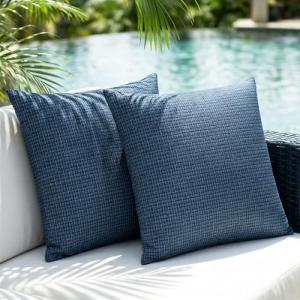
If you have a covered porch, a deck, or any outdoor seating you want to make comfortable and stylish, there are pillow covers specifically engineered for outdoor use. These are typically made from solution-dyed acrylic or polyester fabrics that resist fading from UV exposure, repel moisture, and resist mold and mildew. They're much tougher than indoor covers and can often be cleaned with a mild soap and garden hose.
Embroidered, Woven, and Textured Fabrics
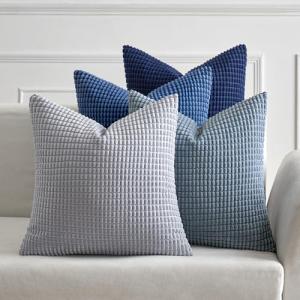
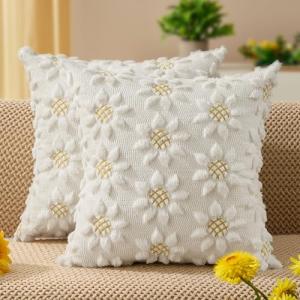
Beyond the base material, many covers incorporate surface texture through embroidery, jacquard weaving, appliqué, or tufting. These add dimension that you can see and feel, which makes a real difference in how a pillow reads in a room. A flat-printed cover and an embroidered cover in the same pattern will feel completely different in person — the embroidered one typically looks more expensive and handcrafted, even when it isn't.
Sizing Guide — Getting the Proportions Right
One of the most common pillow mistakes is using covers that are too small for the inserts (lumpy, sad-looking pillow) or too large (cover that looks deflated and wrinkled in all the wrong ways). Getting the size right matters.
General rule: Go up one size. If your insert is 18 inches, try a 17-inch cover. A slightly snug cover gives the pillow a plump, full look that reads as much more expensive than it actually is. The pillow should look like it has something to say.
For sofas: A standard sofa looks great with 20x20-inch square pillows as the main pillows, and 12x20-inch lumbars as accent pieces. Avoid going smaller than 18 inches on a full-sized sofa — tiny pillows on a large couch tend to look lost.
For armchairs: A single 18x18 or 20x20 pillow works well. One statement pillow is often better than trying to crowd two onto a chair.
For beds: This is where you can go a little more elaborate. Layer euro shams (26x26 inches) at the back, standard sleeping pillows in the middle, and a couple of 20x20 or 18x18 decorative covers in front. A single lumbar pillow at the very front finishes the arrangement.
Styling Tips That Actually Work
Styling pillows is one of those things that looks simple but has a surprising number of ways to go wrong. Here are a few principles that reliably produce good results:
Odd numbers work better. Three pillows on a sofa almost always looks better than two or four. Two can look too symmetrical and stiff; four can look cluttered. Three gives you balance with a little asymmetry.
Mix scales of pattern. If you're going to use multiple patterns, vary the scale — a large bold print paired with a small geometric, for example. Mixing two patterns of the same scale tends to compete rather than harmonize.
Anchor with a solid. If you're using patterned covers, include at least one solid-colored cover. It gives the eye somewhere to rest and keeps the arrangement from feeling too busy.
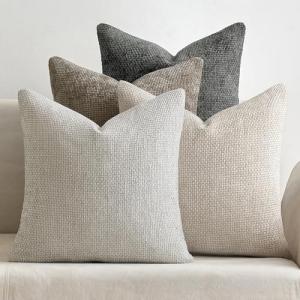
Vary texture more than color. Some of the most sophisticated pillow arrangements use a fairly limited color palette but incorporate a wide variety of textures — smooth cotton, nubby boucle, soft velvet, rough linen. The textural contrast is what makes it interesting.
Don't forget the back of the sofa. Pillows that are just piled in the corners of a sofa often look neglected. Try leaning larger pillows against the back cushions at a slight angle, with smaller pillows in front. It gives the arrangement some depth.
Care and Maintenance
The practical advantage of removable covers is that you can actually clean them — something that's much harder to do with fully stuffed decorative pillows. Most cotton, linen, and polyester covers can go in a standard washing machine on a gentle or delicate cycle with cold water. Turn them inside out before washing to protect any prints or embroidery.
Velvet and faux fur covers often need more care. Check the label — many are dry-clean only, or can be spot-cleaned but shouldn't be fully submerged. If you're buying covers for a household with kids or pets, it's worth prioritizing machine-washable options.
Avoid high heat in the dryer, which can shrink cotton and linen or damage heat-sensitive synthetic fabrics. Air drying is gentler and usually produces better results — especially for linen, which softens beautifully over time when allowed to dry naturally.
Finding the Right Covers for Your Space
The sheer number of throw pillow covers available can feel overwhelming, but it gets much easier once you start with a clear intention. What feeling do you want the room to have? Calm and neutral? Warm and cozy? Bold and eclectic? Sleek and modern?
From there, pick a color story — ideally one that's already present somewhere in the room, even if only in small doses. Pull that color into the pillows and suddenly the whole space feels more considered and intentional. Then layer in texture. And finally, if you want, introduce a pattern.
Throw pillow covers are one of those rare home decor items that are genuinely forgiving. They're inexpensive enough that a mistake isn't devastating, easy to swap out, and available in such enormous variety that you're almost guaranteed to find exactly what you're picturing. They reward experimentation and personal taste in a way that bigger furniture purchases simply don't.
Whether you're starting from scratch in a new space or just looking for a quick refresh, a handful of well-chosen pillow covers is one of the most satisfying ways to make a home feel like yours.