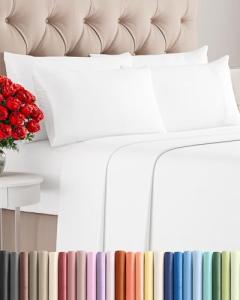
What's Actually Included in a Sheet & Pillowcase Set?
Before anything else, it's worth knowing what you're getting. Sets vary quite a bit from one brand to the next, so it pays to read the product listing carefully.
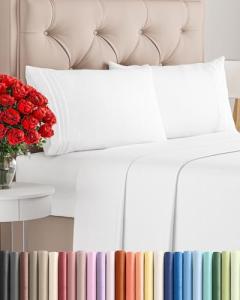
Most standard sets include a fitted sheet, a flat sheet, and one or two pillowcases depending on the size. A single set typically comes with one pillowcase; double, queen, and king sets usually include two.
Some sets — particularly those marketed as "complete" or "luxury" — add extra pillowcases or even a bolster case. Others are stripped back to just the fitted sheet and pillowcases, skipping the flat sheet altogether. If you're someone who doesn't use a top sheet (a growing camp, it has to be said), that kind of set can actually save you money.
Always check what's listed in the box. A "double set" from one brand might include four pieces; from another, just three.
Choosing the Right Fabric: The Decision That Matters Most
If there's one thing worth spending time on, it's the fabric. The material determines how the sheets feel, how long they last, how much care they need, and how they perform across different seasons. Here's a straightforward breakdown of the most common options.
Cotton
Cotton remains the most popular choice, and for good reason. It's breathable, durable, gets softer with every wash, and suits a wide range of sleepers. Within cotton, there are a few important distinctions.
Egyptian cotton is widely regarded as the premium end of the spectrum. It comes from long-staple fibres that produce a particularly smooth, strong thread. Sheets made from genuine Egyptian cotton tend to be noticeably silkier than standard cotton and hold up well over years of washing. They do come at a higher price, but for many people it's worth it.
Percale cotton has a crisp, matte finish — the kind that feels cool and fresh. It's made using a plain weave (one thread over, one thread under) that creates a lightweight, breathable fabric. If you tend to sleep hot or you live in a warmer climate, percale is a strong choice.
Sateen cotton uses a different weave (four threads over, one under) to create a silky, slightly lustrous surface. It's softer and heavier than percale, which makes it feel more luxurious but also less breathable. Sateen suits people who sleep cold or prefer that hotel-like smoothness.
Linen
Linen has had a well-deserved comeback in recent years. Made from flax fibres, it's one of the most breathable fabrics available, which makes it ideal for hot sleepers and warm climates. It's also exceptionally durable — linen sheets typically outlast cotton by years with the right care.
The trade-off is texture. Linen starts out fairly rough and needs several washes before it softens properly. It also wrinkles easily and has a relaxed, lived-in look that some people love and others find untidy. If you're after crisp and smooth, linen isn't the right fit. If you want something that feels effortless and gets better with age, it might be exactly what you need.
Bamboo and Bamboo-Derived Fabrics
Bamboo viscose (sometimes labelled as bamboo rayon or lyocell) has become increasingly popular as a softer, more sustainable-feeling alternative to cotton. Sheets made from bamboo fibres tend to be exceptionally soft, temperature-regulating, and moisture-wicking — qualities that make them attractive for people who sweat during the night.
It's worth noting that the manufacturing process for bamboo viscose involves chemicals, so "natural" is a relative term here. That said, bamboo grows quickly and without pesticides, which does give it a lighter environmental footprint than conventional cotton in some respects.
Microfibre and Polyester Blends
Microfibre sheets are made from very fine synthetic fibres, usually polyester. They're affordable, widely available, and remarkably soft given their price point. They're also wrinkle-resistant and dry quickly after washing.
The downside is breathability. Synthetic fibres don't regulate temperature as well as natural ones, which can be an issue for warm sleepers. They can also develop static and attract pet hair. For a guest room that doesn't get used every night, microfibre is a perfectly practical choice. For your own bed, night after night, you might want to invest a little more.
Thread Count: The Myth Worth Busting
Thread count gets talked about as though it's the single most important number in bedding. It isn't.
Thread count refers to the number of threads woven into a square inch of fabric — both horizontal and vertical threads combined. Higher thread count has long been marketed as a sign of quality, and for a while it worked as a rough guide. A 400-thread-count sheet is generally better than a 100-thread-count sheet made from the same cotton.
But here's where it gets misleading. Many manufacturers inflate their thread count figures by twisting multiple thinner threads together and counting each strand separately. A "1,000 thread count" sheet made this way might actually feel worse than a genuine 400-thread-count one made from long-staple cotton.
For most cotton sheets, the sweet spot tends to sit between 200 and 600 thread count. Above that, the number often says more about marketing than quality. Pay more attention to the type of cotton, the weave, and the brand's reputation than to any inflated thread count claim.
Getting the Right Fit: Sizes and Deep-Pocket Options
A fitted sheet that pops off the mattress in the night is one of life's minor but persistent annoyances. Getting the right fit matters.
Standard sizing follows the bed size — single, double (full), queen, and king. But mattress depth varies considerably, especially with the rise of thick memory foam and hybrid mattresses. Some mattresses are 25–35cm deep; a standard fitted sheet with 25cm corner pockets simply won't stay on.
Look for deep-pocket fitted sheets if your mattress is on the thicker side. Many modern sets specify a pocket depth of 30–40cm, which gives you a much better chance of a secure fit. If you're unsure, measure from the top of your mattress to the base before buying.
Equally important: check that the elastic runs all the way around the fitted sheet, not just at the corners. Full-perimeter elastic holds much more securely and tends to last longer before it loses its stretch.
Caring for Your Sheets: Making Them Last
Good sheets are an investment, and with the right care, they can last a decade or more. Here are a few habits worth building.
Wash before first use. New sheets often contain finishes from the manufacturing process that can feel stiff or irritate sensitive skin. A wash before you first sleep on them makes a real difference.
Follow the temperature guidance. Cotton can generally handle a 60°C wash, which is useful for killing dust mites. Linen and bamboo usually do better at lower temperatures — around 40°C — to preserve the fibres. Always check the care label.
Skip the fabric softener on bamboo and microfibre. Fabric softener coats the fibres and reduces their ability to breathe and wick moisture. For cotton, occasional use is fine, but it's not necessary if you're already happy with the softness.
Dry gently. Tumble drying on low or line drying both work well. High heat accelerates wear and can shrink cotton significantly. Shake them out before drying to reduce wrinkles.
Rotate between sets. Most people find that having two or three sets in rotation extends the life of each considerably. Sheets that get washed and dried every few days wear out much faster than those given time to rest between uses.
Colour, Pattern, and Getting the Look Right
Beyond the practical considerations, sheets also contribute to how your bedroom looks and feels — which matters more than it might seem. A well-made bed has a genuine effect on how you experience a room, and even how you wind down at the end of the day.
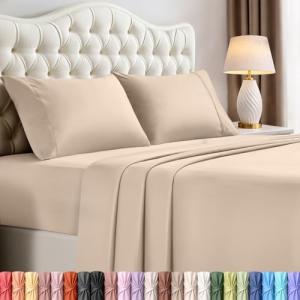
Neutral tones — white, cream, oatmeal, soft grey — are perennially popular because they work with almost any décor, launder predictably, and have a clean, restful quality. White sheets in particular are easy to bleach if needed, which is why hotels have stuck with them for decades.
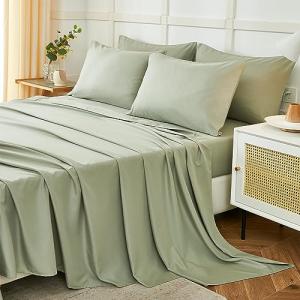
Muted earth tones and soft pastels have become a dominant aesthetic in recent years — sage green, dusty rose, warm terracotta, pale blue. These add personality without being overwhelming and tend to age gracefully as trends shift.
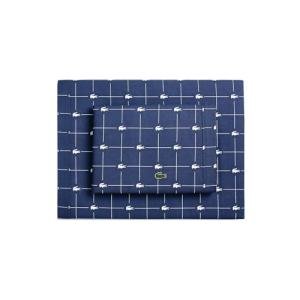
Patterned sets — stripes, checks, botanical prints — can work beautifully as the focal point of a bedroom. The key is balance: if your bedding is patterned, keep other elements in the room relatively simple.
One practical note on colour: darker sheets show lint, dust, and pet hair more readily than lighter ones. If you have pets that share your bed, it's worth factoring that in.
Sets vs. Buying Separately: Which Makes More Sense?
Buying a complete set is almost always better value than purchasing each piece individually. The price per item is lower, the pieces are designed to coordinate, and you're not left hunting for a fitted sheet that matches pillowcases you bought separately six months ago.
That said, buying separately gives you flexibility. If you prefer a flat sheet in a different fabric from your fitted sheet, or if you want extra pillowcases in a contrasting colour, buying à la carte makes sense.
For most people setting up a new bed or replacing an entire set, the coordinated bundle is the smarter and simpler route.
A Few Final Thoughts Before You Buy
The best sheet set is the one you'll actually want to sleep in. All the specifications — thread count, weave, fibre type — are tools to help you find that, not ends in themselves.
Think about how you sleep. Do you run warm or cold? Do you need something that can handle frequent washing at high temperatures? Are you someone who irons their sheets or someone who pulls them straight from the dryer and onto the bed?
Think about longevity too. A slightly more expensive set made from good-quality cotton will almost certainly outlast two cheaper sets bought over the same period. When you factor in the cost per night of sleep, quality sheets often represent better value than they first appear.
And don't overlook the sensory experience. If you can, feel the fabric before you buy. There's no substitute for that.
Sleep is one of the few things you do every single day of your life. The sheets you sleep on are worth getting right.