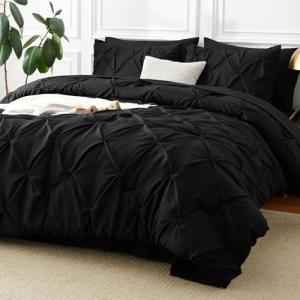
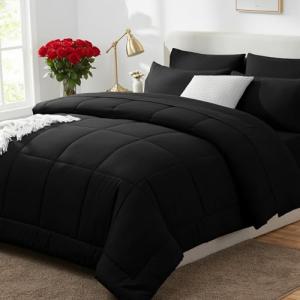
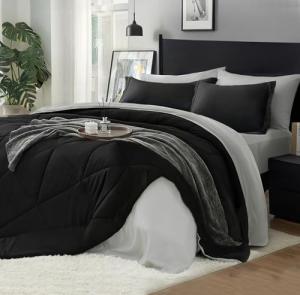
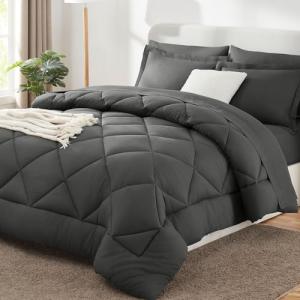
What Exactly Is a Comforter Set?
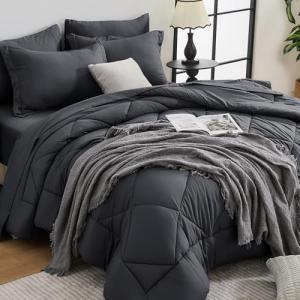
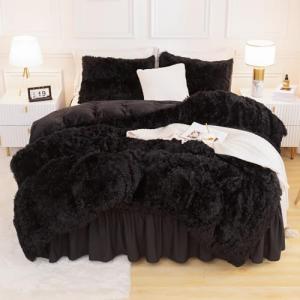
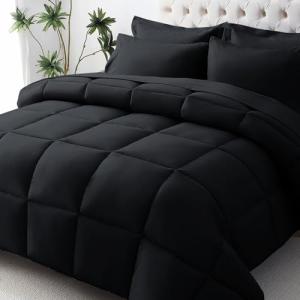
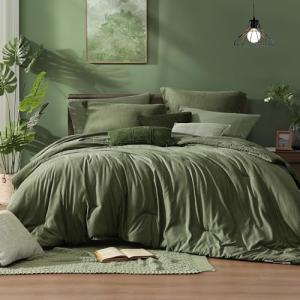
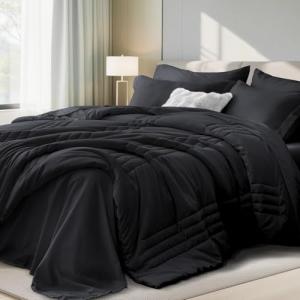
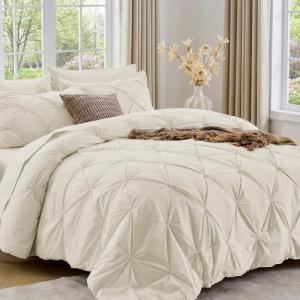
A comforter set is a bundled bedding package that typically includes a comforter — the thick, quilted blanket-like cover that sits on top of your bed — along with matching pillow shams and, depending on the set, decorative throw pillows or a bed skirt. The appeal is simple: everything coordinates, and you don't have to spend hours hunting for pieces that go together.
At its most basic, a comforter set includes:
- The comforter itself — the main quilted piece, filled with down, down alternative, wool, cotton, or synthetic materials
- Two pillow shams (or one, for twin sizes) — decorative pillowcase covers designed to sit at the head of the bed during the day
- Additional decorative pieces — some sets include a bed skirt, euro shams, or accent pillows
More premium sets go further, sometimes including fitted sheets, flat sheets, and even pillowcases for sleeping — essentially turning into a complete bed-in-a-bag solution that covers everything from mattress to top layer.
The Fill: What's Inside Matters More Than You Think
The fill material inside a comforter is what determines warmth, weight, breathability, and how the whole thing feels against your skin. This is probably the most important factor in your decision, and it's worth spending a little time here.
Down and Down Alternative
Traditional down — the soft, fluffy clusters found beneath the feathers of ducks and geese — has been the gold standard in comforter fill for generations. It's incredibly light, traps heat efficiently, and compresses down for easy storage. A high-quality down comforter feels almost weightless while keeping you thoroughly warm. The tradeoff? It's more expensive, can be problematic for people with allergies, and requires more careful washing.
Down alternative fills, made from polyester microfibers engineered to mimic the loft and softness of down, have come a long way. Modern down alternatives are genuinely soft, machine-washable, hypoallergenic, and significantly more affordable. For many people — especially those with pets, kids, or allergies — a high-quality down alternative comforter set is simply the smarter choice.
Cotton Fill
Cotton-filled comforters are breathable, natural, and hypoallergenic. They tend to be heavier than down but offer a grounded, substantial feel that some sleepers strongly prefer. They're also easier to care for and hold up well over time. If you tend to sleep warm or live in a moderate climate, a cotton-fill comforter set is worth serious consideration.
Wool Fill
Wool is a natural temperature regulator, making it an excellent year-round option. It wicks moisture, resists dust mites, and provides warmth without overheating — a rare combination. Wool comforters are particularly popular with people who experience night sweats or who share a bed with a partner who runs at a very different temperature.
Synthetic Blends
Many mid-range and affordable comforter sets use polyester fiberfill blends. Quality varies considerably in this category. Cheaper fills can clump over time, lose loft after washing, and feel stiff or plasticky. Better synthetic fills — particularly those using fine microfiber — are soft, resilient, and perform surprisingly well. Look for fill descriptions that mention "cluster fiber" or "gel fiber" constructions, which tend to hold their shape better than basic poly fills.
Fill Power and Weight: The Numbers That Actually Mean Something
If you're looking at down or down alternative comforters, you'll encounter a number called fill power. This measures how much space one ounce of fill occupies — the higher the number, the loftier and more insulating the material. Fill power ranges typically run from about 400 (decent everyday quality) up to 800 or higher (premium luxury bedding).
For most people, a fill power between 500 and 650 offers a comfortable balance of warmth and value. You don't need to chase the highest number unless you live in a genuinely cold climate or simply love the feeling of sleeping under a very puffy, cloud-like comforter.
Weight is a separate consideration. Some sleepers find a heavier comforter more comforting — there's even a well-documented psychological phenomenon around weighted bedding and its calming effects. Others find anything heavy stifling. Most standard comforter sets fall in the medium weight range, but if this matters to you, check the listed weight in the product details.
Shell Fabric: What You're Actually Touching
The outer shell of a comforter — the fabric that encloses all that fill — matters both for feel and for durability. Common shell materials include:
Cotton and cotton blends are by far the most popular. A shell with a higher thread count (300–400 is a good sweet spot) will feel softer and do a better job of keeping fill from poking through. Sateen weave shells have a subtle sheen and buttery feel; percale weave shells are crisp and cool.
Microfiber shells are lightweight, wrinkle-resistant, and easy to care for. They can feel slightly synthetic to the touch but are excellent for kids' rooms or high-use guest bedrooms where durability matters.
Polyester-cotton blends split the difference — more durable than pure cotton, softer than pure polyester.
For people who sleep hot, a cotton percale shell is almost always the better choice. For people who want a luxuriously soft, smooth feel, sateen or microfiber will deliver.
Sizing: Get This Right Before You Buy
Comforter sets come in standard sizes that correspond to mattress sizes — Twin, Twin XL, Full/Queen, and King/California King. But there's a nuance here that trips a lot of buyers up: comforter dimensions vary between brands, and the same nominal size can differ by several inches from one manufacturer to another.
A comforter that fits a queen mattress "technically" might drape only a few inches over the sides. If you prefer a more dramatic, hotel-style overhang, look for oversized options or check the exact dimensions (usually listed in inches) rather than relying on the size label alone. A queen mattress is typically 60 x 80 inches — a comforter around 90 x 90 or 92 x 96 inches will give you a generous drape on all sides.
Also worth noting: if you have a mattress with extra depth — pillow-top mattresses or thick memory foam layers can run 14–18 inches deep — a standard comforter may not hang as far over the sides as you'd expect. Plan accordingly.
Style and Design: Making It Work in Your Bedroom
The visual side of choosing a comforter set is genuinely fun, but it helps to have a framework rather than just scrolling through options until decision fatigue sets in.
Start With Your Walls and Floor
If your bedroom walls are a neutral — white, gray, greige, soft sage — you have significant freedom. A bolder comforter print or a saturated color will anchor the room without creating visual chaos. If your walls already have color or your floors are a strong wood tone, a softer, more neutral comforter set often works better as a calming counterpoint.
Consider the Scale of Patterns
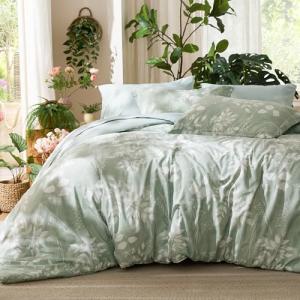
Large-scale patterns (wide stripes, oversized florals, bold geometric prints) can look stunning in a large room with high ceilings. In a smaller space, they can feel overwhelming. Smaller-scale patterns — subtle textures, fine stripes, tonal prints — tend to work across more room sizes and photograph well for those who care about that.
Coordinate, Don't Over-Match
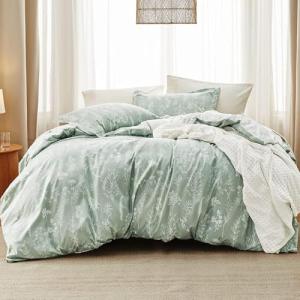
One of the most common mistakes with comforter sets is leaning too hard into "everything matches exactly." Modern bedroom styling tends to prefer a more layered, slightly eclectic approach — a comforter set in a main color or pattern, with throw pillows and a blanket that complement rather than duplicate the design. Many comforter sets now include enough variety within the set itself (different textures, coordinating but not identical patterns) to make this easy.
Care and Maintenance: Keeping It Looking and Feeling Good
Even the best comforter set will disappoint if it's not cared for properly. The general rules:
Most comforters labeled "machine washable" can be washed in a front-loading machine on a gentle cycle with cool or warm water. Top-loading machines with agitators can damage fill by creating clumping and stress on seams. If you have a top-loader with an agitator, a laundromat with large front-loaders is worth the trip for comforter washing.
Always dry thoroughly. A comforter that isn't fully dry will develop mildew, and that smell is essentially impossible to get rid of. Use a large dryer on low heat, and toss in a few dryer balls to prevent fill from clumping. Expect a full drying cycle to take 60–90 minutes or more.
Use a duvet cover. Even if your comforter set doesn't come with one, investing in a duvet cover extends the life of your comforter significantly. You wash the cover regularly and the comforter itself only a few times a year.
Spot clean promptly. The moment something spills on your comforter, blot (don't rub) with a mild detergent and cold water. Letting stains set makes them exponentially harder to remove.
What to Look for When Comparing Sets
When you're weighing your options, here are the factors worth prioritizing:
Fill type and quality — This is the single biggest driver of how the comforter will feel and perform. Spend more here if you're going to spend more anywhere.
Shell fabric and construction — Look for quality stitching, baffle-box or sewn-through construction (which keeps fill evenly distributed), and a fabric that matches your sleep temperature needs.
Set contents — Count what's included. A "complete" set from one brand might include shams and decorative pillows; from another, it might just be the comforter and shams. Make sure you know what you're getting before comparing prices.
Care instructions — If machine-washing at home matters to you, confirm the set is truly home-washable. Some down comforters technically can be washed at home but are much better served by professional laundering.
Warranty or return policy — Reputable bedding brands stand behind their products. A 30–60 day return window is standard in the industry and gives you time to actually sleep with the set before committing.
A comforter set is one of the more personal purchases you'll make for your home. It shapes the look of your bedroom, affects the quality of your sleep, and — if you choose well — can last years before needing replacement. The best approach is to prioritize fill quality and fabric feel first, then layer in the design considerations once you know the functional foundation is solid.
Take the time to read the specifications, not just look at the photos. The product that photographs beautifully isn't always the one that will feel best on a cold night in February. But when you find the right combination of warmth, softness, and style? It's one of those small domestic pleasures that quietly improves your life every single day.