What Is a Body Pillow, Really?
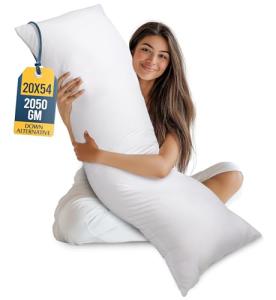
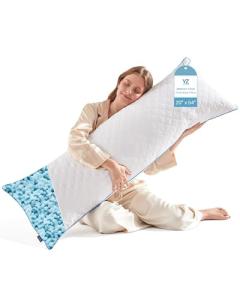
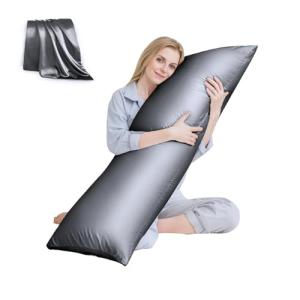
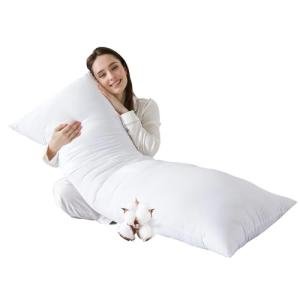
A body pillow is an oversized, elongated pillow designed to support the full length of your body while you sleep. Most standard body pillows run between 48 and 54 inches long, though some stretch even further. Unlike a regular head pillow, a body pillow isn't just about cushioning your head — it's about aligning your spine, reducing pressure on your hips and knees, and giving your arms and legs somewhere natural to rest.
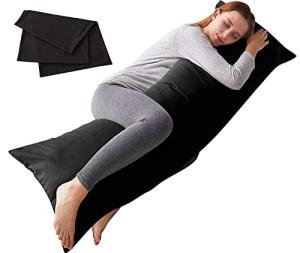
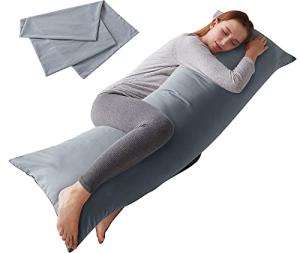
People use them in all sorts of ways. Side sleepers tuck them between their knees to keep their hips level. Pregnant women wrap around them for support as their center of gravity shifts. Back pain sufferers use them to prop and cushion vulnerable areas. Some people simply find that having something to hold onto — something firm but yielding — helps them fall asleep faster and stay asleep longer.
The science behind this isn't complicated. When your body is properly supported, your muscles don't have to work as hard to maintain alignment while you sleep. That translates to less tossing and turning, fewer sore spots in the morning, and deeper, more restorative sleep overall.
The Different Types of Body Pillows
Standard Rectangular Body Pillows
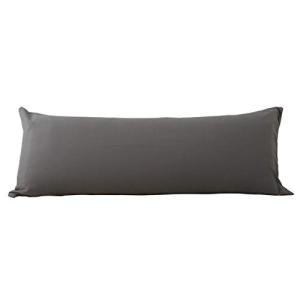
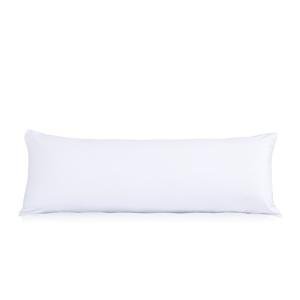
This is the classic. A long, straight pillow that runs from roughly your chin to your knees. It's simple, versatile, and works for a wide range of sleeping positions. You can hug it, tuck it between your legs, or position it behind your back — whatever feels right for your body that night.
Standard body pillows are great entry points if you've never used one before. They're generally the most affordable option, they're easy to find replacement covers for, and they work with most sleeping setups without requiring you to rethink your entire bed arrangement.
U-Shaped Body Pillows
U-shaped pillows are the big guns of the body pillow world. They wrap around both sides of your body simultaneously, supporting your back, your belly (if pregnant), your knees, and your head all at once. If you've ever seen those enormous, horseshoe-shaped pillows marketed to expectant mothers, that's exactly what we're talking about.
The advantage here is total-body support without having to reposition your pillow every time you roll over. The disadvantage is size — a U-shaped pillow takes up a significant amount of bed real estate, which can be a dealbreaker if you share your bed with a partner.
C-Shaped and J-Shaped Body Pillows
These are essentially variations on the U-shape, but with one side shorter or curved differently. They're popular during pregnancy because they support the belly from the front while also offering back support, but in a slightly more compact form than the full U.
C-shaped and J-shaped pillows tend to be more manageable for smaller beds and are a good middle ground between the simplicity of a straight pillow and the comprehensive support of a U-shape.
Wedge Body Pillows
Not every body pillow is long and cylindrical. Wedge pillows take a different approach — they're triangular, designed to prop up specific parts of the body at an angle. People use them to elevate the upper body for acid reflux, to support the belly during side sleeping, or to prop up the knees for lumbar relief.
Wedges are specialized tools rather than all-purpose pillows, but in the right situation, they're extraordinarily effective.
Fill Materials: What's Inside Matters
The feel of a body pillow depends almost entirely on what's stuffed inside it. Here's a breakdown of the most common fills and what they're actually like to sleep with.
Memory Foam
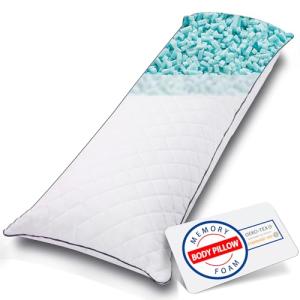
Memory foam body pillows contour to your body, pressing gently against your curves and distributing weight evenly. They're excellent for people who need consistent pressure relief — think hip pain, shoulder pain, or joint discomfort. The tradeoff is heat retention. Memory foam doesn't breathe particularly well, which can make it uncomfortably warm for hot sleepers.
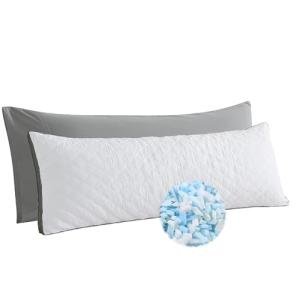
Shredded memory foam is a popular variation that solves some of these problems. Instead of a solid foam core, the pillow is filled with small chunks of foam that allow air to circulate while still providing that characteristic contouring feel. Shredded foam also tends to be adjustable — you can add or remove fill to dial in the exact firmness you prefer.
Down and Down Alternative
Down fill (from duck or goose feathers) produces a soft, cloud-like pillow that feels luxuriously plush. Down body pillows are easy to reshape and fluff, they breathe well, and they have a softness that's hard to replicate with synthetic materials. They're a great choice if you want something to hug rather than something to push against.
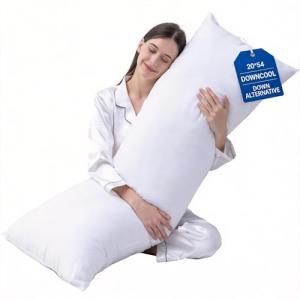
Down alternative fills use polyester fibers designed to mimic the feel of real down without the allergen concerns. Quality varies widely — the best down alternative fills feel remarkably similar to the real thing, while cheaper versions go flat quickly and develop lumpy spots over time.
Latex
Natural latex body pillows are bouncy, responsive, and naturally resistant to dust mites and mold. They don't contour as deeply as memory foam, but they push back against your body in a way that many sleepers find more supportive and less "sinking." Latex also tends to sleep cooler than memory foam.
The drawback is weight and price. Latex pillows are noticeably heavier than other types, and natural latex comes with a premium price tag. But for people who love latex and invest in a quality pillow, it's often a lifelong relationship.
Polyester Fiberfill
Polyester fill is the most common material in budget-friendly body pillows. It's lightweight, hypoallergenic, and machine washable in most cases. The feel tends toward the soft and squishy end of the spectrum. It's not the most durable option — polyester fill compresses over time and tends to develop flat spots — but as an affordable entry point, it gets the job done.
Who Benefits Most from a Body Pillow?
Pregnant Women
This is arguably where body pillows have their most dramatic impact. Pregnancy changes everything about how you sleep. As the belly grows, back sleeping becomes uncomfortable or even medically inadvisable, and side sleeping puts strain on the hips and lower back. A good pregnancy body pillow — particularly a U-shaped or C-shaped design — supports the belly from the front, cushions the back, and keeps the hips aligned.
Many OBGYNs and midwives recommend body pillows specifically to help pregnant women sleep on their left side, which improves circulation to the baby. The pillow makes this position sustainable for an entire night rather than something you have to maintain through willpower alone.
Side Sleepers
Side sleeping is the most popular sleep position, and it's generally considered one of the healthiest for spinal alignment — but only if your body is properly supported. Without something between the knees, side sleeping pulls the top leg downward, rotating the pelvis and straining the lower back. A body pillow between the knees corrects this, keeping the spine in a neutral position from shoulders to hips.
People with Back or Hip Pain
Chronic back and hip pain often stems from poor sleeping posture compounding over years. A body pillow won't fix an underlying structural problem, but it can meaningfully reduce the daily accumulation of strain that makes chronic pain worse. Plenty of people with back pain report significant improvement in their morning discomfort after switching to a body pillow setup.
Restless Sleepers
If you toss and turn through the night, a body pillow gives you something to anchor yourself to. There's a psychological dimension to this as well — the sensation of being held or cradled activates the same calming responses as physical touch, which can reduce anxiety and make it easier to settle into sleep.
How to Choose the Right Body Pillow
Think About Your Sleep Position First
If you're a strict side sleeper, a straight body pillow is probably all you need. If you switch between your back and sides, or if you're pregnant, a U-shape or C-shape gives you support regardless of how you end up lying. If you're targeting a specific issue like acid reflux or knee pain, a wedge might serve you better than a full-length pillow.
Match the Fill to Your Needs
Hot sleepers should gravitate toward latex, down, or shredded foam rather than solid memory foam. People with allergies should avoid down and look for hypoallergenic synthetic fills or natural latex. If you want something you can customize over time, choose a pillow with a removable cover and adjustable fill.
Don't Underestimate the Cover
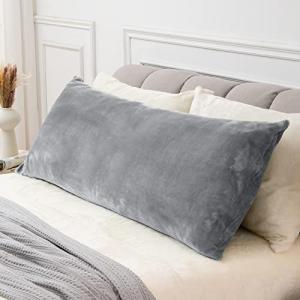
The cover is what actually touches your skin, so it matters. Look for covers made from breathable natural materials like cotton, bamboo-derived fabric, or Tencel. These materials feel softer against the skin and help regulate temperature. Check that the cover is removable and machine washable — a body pillow you can't clean easily is a body pillow you'll eventually stop using.
Consider Your Bed Size
A full-length body pillow on a twin bed leaves very little room for anything else. If you're working with limited space, a shorter pillow or a C-shape might be more practical than a full U-shape.
Caring for Your Body Pillow
A body pillow is an investment, and with the right care, a quality one should last for years. Most pillows with synthetic or down alternative fill can be machine washed — check the care label, use a gentle cycle with mild detergent, and make sure the pillow is thoroughly dry before you use it again. Damp fill is a breeding ground for mold.
Memory foam and latex pillows typically can't go in the washing machine. Instead, spot clean as needed and rely on a high-quality, removable cover to keep the pillow fresh. Washing the cover regularly is usually sufficient.
Fluff or reshape your pillow regularly to prevent the fill from settling into permanent lumps. And if your pillow no longer springs back when you fold it, or if you wake up sore in places that used to feel fine, it's probably time for a replacement.
A body pillow isn't a luxury — or at least, it doesn't have to be. For many people, it's simply the missing piece in a sleep setup that otherwise checks all the boxes. The right pillow, matched to your sleep style and physical needs, can reduce pain, improve sleep quality, and make going to bed something you genuinely look forward to.
Take some time to think about what's actually bothering you at night. Is it hip discomfort? Back stiffness? Difficulty staying in one position? The answer to that question will point you toward the right style and fill. From there, it's just a matter of finding one that fits your budget and your bed — and then letting it do its job.
Good sleep is one of the most important things you can invest in. A body pillow might just be the simplest way to get there.