
What Exactly Is a Bedspread or Coverlet?
It's worth clearing up a bit of confusion, because the terms get used loosely — and sometimes interchangeably — when they actually describe two distinct things.
A bedspread is a full-coverage top layer designed to drape all the way to the floor (or close to it) on all sides of the bed. It covers the mattress, box spring, and often the bed frame entirely, giving the bed a neat, tailored, hotel-like appearance. Bedspreads are typically lightweight and are meant more for daytime display than for sleeping under, though many people do use them year-round in warmer climates or as a single top layer in temperate seasons.
A coverlet, on the other hand, is a lighter, shorter layer that covers the top of the bed and hangs just a few inches over the sides — enough to cover the mattress but not the box spring or frame. Coverlets are often used layered over a duvet or blanket and are beloved for their versatility. They're easy to fold down at night, simple to wash, and ideal for those who like a layered, styled look.
Both options give your bed a finished appearance during the day, both come in an enormous variety of materials and patterns, and both serve the same fundamental purpose: making your bed look like a place worth coming home to.
Why Your Bed Needs One
Ask anyone who has invested in a quality bedspread or coverlet, and they'll tell you the same thing: it changes the whole room. The bed is the focal point of a bedroom — it takes up more visual real estate than anything else in the space. When it looks intentional and inviting, the entire room feels more put-together.
But beyond aesthetics, there are practical reasons to love these pieces.
Temperature regulation is a big one. A coverlet sits in that sweet spot between a sheet and a full duvet — it adds warmth without overheating you. For people who run warm at night, or for those shoulder-season months when it's not cold enough for a heavy duvet but too cool to go without a layer, a coverlet is exactly the right call.
Easy layering is another advantage. Unlike a bulky duvet, a coverlet folds and drapes effortlessly. You can fold it to the foot of the bed for a classic look, layer it under a duvet for extra warmth, or use it solo during warmer months. The flexibility is hard to beat.
Simplified bed-making is something most of us quietly appreciate more than we admit. A coverlet is easy to throw on in the morning and instantly gives the bed a tidy, pulled-together appearance without a lot of tucking and smoothing.
And then there's the protection factor. Coverlets and bedspreads act as a barrier between your decorative pillows, shams, and the everyday grime of the world. Kids, pets, afternoon naps in clothes — a top layer means your bedding underneath stays cleaner, longer.
Materials That Matter
The feel, function, and longevity of a bedspread or coverlet comes down almost entirely to what it's made of. Here's what you'll find on the market and what each brings to your bedroom.
Cotton
Cotton is the classic choice, and for good reason. It's breathable, gets softer with every wash, and works beautifully across seasons. Woven cotton coverlets — especially those with a waffle or matelassé weave — have a satisfying texture that photographs well and feels even better in person. If you're looking for something that's easy to care for, durable, and timeless, cotton is almost always the right answer.
Quilted Cotton
A step up in warmth and texture, quilted cotton bedspreads feature two layers of fabric with a thin batting stitched between them. The quilting creates dimension and visual interest, and the added loft gives a slightly fuller look. These work especially well in traditional, farmhouse, or cottage-style bedrooms.
Linen
Linen coverlets have surged in popularity, and it's easy to see why. The material has a natural, relaxed texture that looks casually elegant — lived-in without being messy. Linen is highly breathable, incredibly durable, and gets better with age, softening over time rather than wearing out. It's particularly well-suited to warm climates and warm sleepers.
Velvet and Microfiber
For those who lean toward a more luxurious, richly layered bedroom aesthetic, velvet bedspreads bring drama and depth. They catch light beautifully, add warmth both physically and visually, and photograph like they belong in a design magazine. Microfiber options offer a similar soft hand at a lower price point and are especially easy to maintain.
Knit and Woven Throws
Some coverlets blur the line between bedding and décor — chunky knits and open-weave throws that sit at the foot of the bed or drape casually across the middle. These are less about full coverage and more about texture and warmth on demand. Layered over a made bed, they add personality and a sense of ease.
Finding the Right Style for Your Space
This is where things get genuinely fun. Bedspreads and coverlets come in such a wide range of styles, colors, and patterns that there's something for every kind of bedroom — from the spare and minimalist to the lushly layered.
Clean and Contemporary
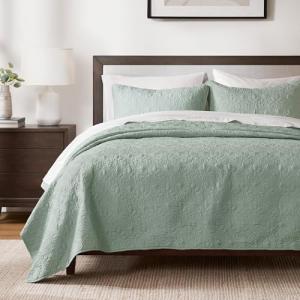
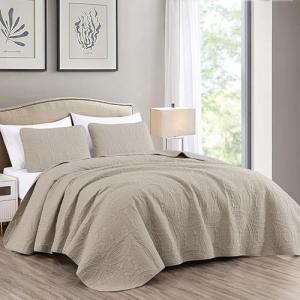
If your bedroom leans modern — low-profile bed frame, neutral palette, clean lines — you'll want a coverlet that complements rather than competes. Solid colors in warm whites, soft greys, camel, or slate blue work beautifully. A waffle-weave or subtle tone-on-tone pattern adds texture without visual noise.
Classic and Traditional
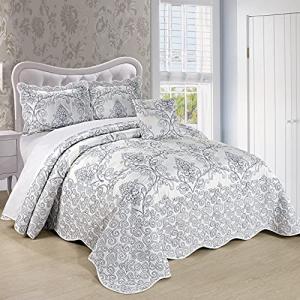
For more formal or traditional spaces, a matelassé bedspread in white or ivory is a perennial favorite. The intricate woven patterns give the bed a sense of craftsmanship and history. Deep, rich colors — navy, burgundy, forest green — in quilted cotton bedspreads also feel right at home in traditional bedrooms.
Relaxed and Bohemian
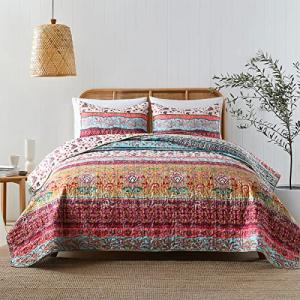
Layered textiles are at the heart of bohemian style. Mix a linen coverlet with a textured throw, a patterned quilt, and an eclectic mix of pillows. Don't worry too much about matching — the beauty of this approach is in the intentional imperfection of it all.
Cozy and Farmhouse
Ticking stripes, chambray, and classic quilted patterns in soft, faded tones work perfectly in farmhouse-style spaces. The look is warm, approachable, and reassuringly unpretentious.
Romantic and Layered
For a bedroom that feels genuinely indulgent, layer a quilted coverlet beneath a duvet with a contrasting but complementary cover. Tuck the coverlet under the duvet at the foot of the bed so it peeks out at the bottom. Add Euro shams, decorative pillows, and a textured throw across the foot for a bed that looks like it belongs in a boutique hotel.
Size Guide: Getting It Right
One of the most common mistakes people make when buying bedspreads and coverlets is choosing the wrong size. Here's a quick reference to help.
For a Twin bed, look for dimensions around 60–70 inches wide by 80–90 inches long. A standard twin coverlet will drape neatly over the sides without touching the floor.
For a Full/Double bed, aim for 80–90 inches wide by 90–100 inches long to get adequate side coverage.
For a Queen bed, 90–100 inches wide by 90–100 inches long is a reliable range. If your mattress is particularly deep (over 14 inches), size up.
For a King bed, look for coverlets at least 108–110 inches wide by 90–100 inches long. California King beds need a slightly longer option — 110 inches by 100+ inches.
Keep in mind that bedspreads are designed with more drop on the sides than coverlets, so if full floor coverage is important to you, choose a bedspread sized for the next bed size up.
Caring for Your Bedspread or Coverlet
These pieces are meant to be used, washed, and loved for years. Most cotton, linen, and microfiber options are fully machine washable — and in fact, they often look better after a few washes as the fibers relax and soften.
Wash in cold or warm water on a gentle cycle. Use a mild detergent and avoid bleach on anything that isn't white cotton. Tumble dry on low heat, and remove promptly to reduce wrinkling. For linen especially, line drying preserves the fabric over time.
Quilted bedspreads with batting can take longer to dry — make sure the center is fully dry before storing or putting back on the bed to prevent mildew. When in doubt, add a second drying cycle on low.
Store bedspreads and coverlets folded loosely in a cool, dry place when not in use. Avoid compression bags for long-term storage, as sustained pressure can flatten batting and distort the quilting.
Layering Like a Pro
The best-dressed beds are layered beds — and a coverlet is the key piece that makes layering work. Here are a few approaches worth trying.
The Classic Fold: Place your fitted sheet and top sheet on the bed, then lay the coverlet on top. Fold the top sheet down over the coverlet at the headboard for a crisp, hotel look. Finish with two standard shams and a couple of decorative pillows.
The Casual Drape: Skip the top sheet entirely. Layer the coverlet directly over a fitted sheet, letting it fall naturally with soft folds at the sides. Pull it down slightly from the headboard to reveal a layered look. This is particularly gorgeous with linen.
The Foot Accent: Use a larger duvet or comforter as your primary cover, then fold a contrasting coverlet in thirds and lay it across the foot of the bed. This adds color, texture, and dimension without covering the duvet entirely.
The Full Stack: For maximum coziness and visual drama, layer a coverlet under a duvet, letting the coverlet extend a few inches below the duvet's hem. Add a folded throw at the foot for the final touch.
Bedspreads and coverlets are among the most impactful investments you can make in your bedroom. They bring texture, color, warmth, and a sense of intention to a space where you spend a third of your life. Whether you're drawn to the crisp simplicity of a white matelassé bedspread or the casual warmth of a layered linen coverlet, the right piece doesn't just cover your bed — it completes your room.
Take your time, feel the fabric, consider the weight, and think about how it will layer with what you already have. A good bedspread or coverlet isn't just bedding. It's the thing that makes you want to make your bed in the morning — and that's worth quite a lot.