Browse the full range of bed canopies and drapes and find the style, fabric, and scale that fits your space. The bed you've always wanted to wake up in is closer than you think.
Bed Canopies & Drapes
Product List
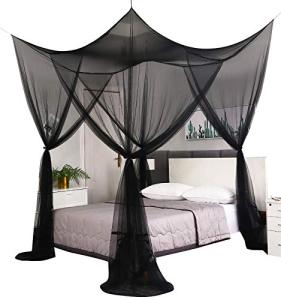
Mengersi Bed Canopy,Canopy Bed Curtains Bed D...
Product Review Score
4.85 out of 5 stars
213 reviews$19.99
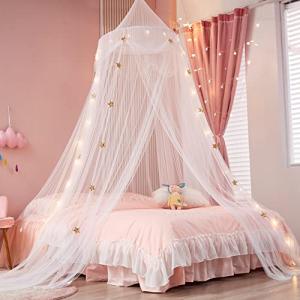
Nattey Bed Canopy with Lights for Girls,Gold...
Product Review Score
4.88 out of 5 stars
170 reviews$29.99 $28.49
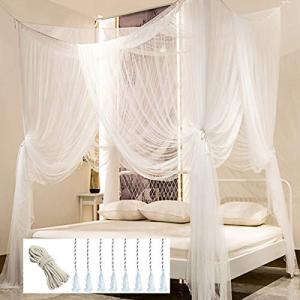
Comtelek Bed Canopy, Canopy Bed Curtains Bed...
Product Review Score
4.43 out of 5 stars
202 reviews$25.99 $17.99
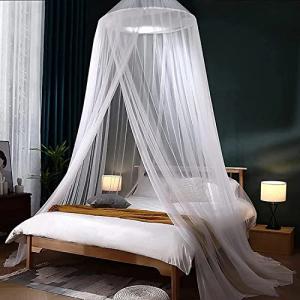
Mosquito Net Bed Canopy for Girls,King Canopy...
Product Review Score
4.32 out of 5 stars
120 reviews$12.34 $11.72
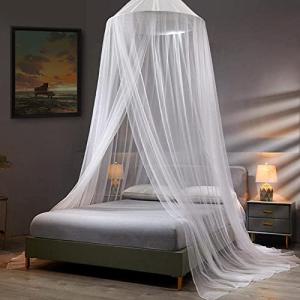
VISATOR Mosquito Net Bed Canopy for Girls,Kin...
Product Review Score
4.13 out of 5 stars
36 reviews$14.99 $11.99
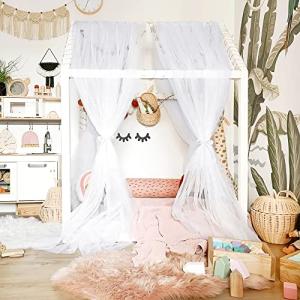
NICETOWN Decorative White Bed Canopies & Drap...
Product Review Score
4.36 out of 5 stars
56 reviews$27.99
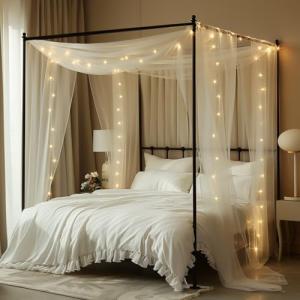
MVOVM Bed Canopy for Girls with Lights 30 * 2...
Product Review Score
4.13 out of 5 stars
79 reviews$26.99
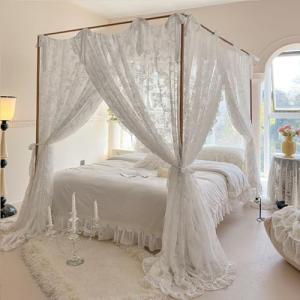
SCMTYWCQ Elegant Lace Princess 4 Corner Post...
Product Review Score
4.42 out of 5 stars
121 reviews$124.99
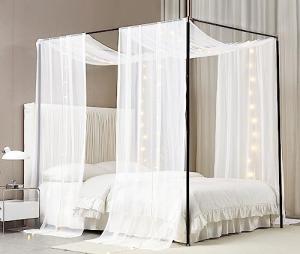
Akiky Canopy Bed Curtains with Light Princess...
Product Review Score
4.28 out of 5 stars
58 reviews$37.99 $36.09
What Exactly Are Bed Canopies and Drapes?
Let's clear up the terminology, because these terms get used interchangeably and that can make shopping confusing.
A bed canopy typically refers to a fabric cover that goes above the bed — either suspended from the ceiling, mounted to the wall, or attached to a four-poster or canopy bed frame. The fabric cascades down the sides, partially or fully enclosing the sleeping area. Canopies can be purely decorative, offering just a visual sense of enclosure, or they can be more functional, with panels that actually close around you.
Bed drapes, on the other hand, usually refer to fabric panels that hang on either side of the headboard or bed — more like curtains for the bed than a full overhead canopy. They frame the sleeping area without necessarily enclosing it. Think of them as the backdrop to your bed: soft, textured, and deeply atmospheric.
In practice, many products blur this line. A four-post bed drape kit might include both an overhead panel and side curtains. A hoop canopy creates a gathered tent effect that incorporates both concepts. When browsing this category, it helps to think less about rigid definitions and more about the shape and mood you want to create.
The Different Styles — Finding the One That Fits Your Space
Four-Post and Canopy Bed Drapes
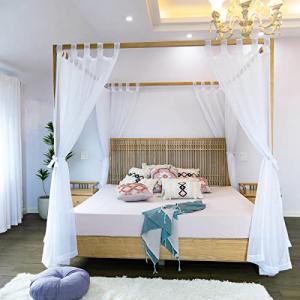
If you're lucky enough to have a four-poster or canopy bed frame, you already have the architecture in place. Drapes for these beds are designed to hang from the posts or from a fabric tester (the flat panel across the top of the frame) and fall to the floor on two or four sides. The effect is palatial — there's really no other word for it.
Fabric choice matters enormously here. Heavyweight velvets in deep jewel tones give a period drama quality that's genuinely stunning in the right space. Linen and cotton blends feel more relaxed and contemporary. Sheer voile or organza panels let light through while still creating that sense of soft enclosure. Many people layer these — a sheer inner panel for airiness, a heavier outer curtain for drama and light control at night.
Ceiling-Mounted Canopies
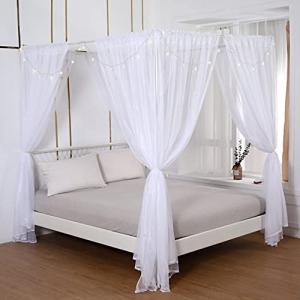
For beds without posts, ceiling-mounted canopies are the most versatile solution. A single ceiling hook or canopy mount holds a gathered crown of fabric above the headboard, with panels draping outward and downward in a flowing tent shape. The installation is simpler than it looks — most setups require just one or two hooks and basic hardware.
Ceiling-mounted canopies work particularly well in rooms with higher ceilings, where the full drape length can be appreciated. In rooms with lower ceilings, a more compact hoop design or a wall-mounted option tends to read better proportionally.
Hoop and Ring Canopies
Hoop canopies are the circular, gathered designs you've probably seen in nurseries and children's rooms — but they've crossed firmly into adult bedroom territory, too. A fabric ring or embroidery hoop sits above the bed, with lightweight fabric cascading down in a cone or gathered cloud shape. The look is soft and dreamy without being overdone.
The appeal of hoop canopies is their simplicity. One hook, a length of sheer fabric, and you've completely changed the atmosphere of a room. They work over single beds, doubles, and even kings if you choose a larger hoop diameter. In boho-inspired interiors, macramé details and natural cotton are popular. In more modern rooms, a minimalist white ring with crisp linen creates a clean, almost architectural effect.
Wall-Mounted Canopy Brackets
Wall-mounted options use a bracket that projects from the wall above the headboard, holding fabric that drapes forward and downward over the bed. This style creates a half-canopy effect — enveloping from the head of the bed rather than all the way around. It's particularly effective in apartments and smaller rooms where ceiling mounting isn't practical, and where a full enclosure would feel too heavy for the space.
Half-canopies also work beautifully as a substitute for a headboard entirely. A wooden or iron bracket with cascading linen panels can create more visual interest than a padded headboard at a fraction of the cost.
Choosing the Right Fabric
Fabric is where the character of your canopy lives. The same hoop design in sheer white organza versus heavy cotton canvas produces two entirely different moods, and neither is wrong — they're just suited to different spaces and intentions.
Sheer and lightweight fabrics — voile, chiffon, organza, tulle — create that ethereal, dream-like quality most people picture when they imagine a bed canopy. They catch light beautifully, move gently in any air current, and make a room feel softer and more romantic. They offer minimal privacy and no meaningful light control, which is fine for purely decorative purposes but worth considering if blackout conditions matter to you.
Cotton and linen sit in the middle ground. Breathable, durable, and available in a vast range of weights and weaves, they work across almost every aesthetic — from Scandinavian simplicity to Mediterranean warmth. Heavier cotton panels can actually contribute to some light blocking and a sense of acoustic softness in a room.
Velvet and heavier drape fabrics are the grand statement option. Rich, tactile, and visually dominant, velvet canopy drapes have been associated with luxury bedrooms for centuries — because they genuinely deliver that feeling. They're not for minimal spaces, but in a room that can hold them, they're incomparable.
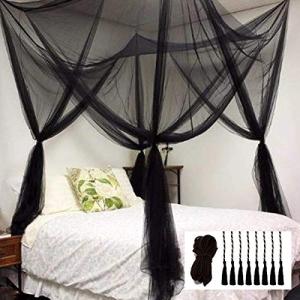
Mosquito net fabrics deserve a mention here because they serve a functional as well as decorative purpose. In warmer climates or for outdoor sleeping areas, fine mesh canopies provide real protection while maintaining a light, airy look. Many people use mosquito net canopies purely for aesthetics even in homes with no mosquito problem — there's an undeniable tropical romance to them.
Practical Considerations Before You Buy
Ceiling Height
This is the first practical question to ask. If you have 8-foot ceilings, a voluminous gathered canopy that needs 3 feet of vertical space to look right will feel cramped. Measure from ceiling to mattress top, account for hardware, and work backward from the fabric length you want.
Bed Size and Room Proportions
A delicate hoop canopy over a king-size bed can look underwhelming — the scale is off. Conversely, an elaborate four-post drape setup in a small room can be overwhelming. Proportionality matters. As a rough guide, canopies look best when their width is roughly two-thirds to three-quarters of the bed width.
Installation Requirements
Most ceiling-mounted canopies require a secure ceiling anchor, ideally into a joist or with an appropriate hollow ceiling anchor. If you're renting, look specifically for tension-rod or command-hook-compatible designs. Wall-mounted brackets typically need two secure screws and are easier to manage in most situations.
Care and Maintenance
Sheer fabrics show dust and can yellow over time with sun exposure. Darker, denser fabrics hide dust better but may fade in direct sunlight. Consider how easy the panels are to remove and launder — some canopies have fixed attachment points that make washing inconvenient, while others have simple hook-and-loop or tie fastenings that make removal straightforward.
Canopies in Children's Rooms — A Special Case
It would be dishonest to write about bed canopies without addressing children's rooms, because this is genuinely where a lot of canopy magic happens. A simple hoop canopy over a child's bed turns sleep into an adventure — it's a den, a castle, a secret reading nook, all at once.
For children's canopies specifically, look for fabrics that are easy to wash (because they will need washing), free from small detachable decorations, and ideally made from natural fibres that won't trap heat. Safety matters too: ensure any ceiling hardware is properly secured, keep hanging cords well out of reach, and choose canopies that are designed with children's spaces in mind.
The good news is that children's canopy options have expanded enormously. Stars, animals, botanical prints, solid sherbet colours, and neutral naturals all exist in this space. A well-chosen children's canopy can grow with a child for years — especially the simpler, more timeless designs.
Styling Your Canopy — Making It Look Like It Belongs
The most common mistake with bed canopies is treating them as an isolated element. A beautiful canopy on an otherwise bare, uncoordinated bed will look like an afterthought. For the full effect, think about the whole bed as a composition.
Bedding should complement, not compete. If your canopy is a strong colour or bold fabric, keep bedding quieter. If your canopy is sheer white or neutral, bedding can do more of the visual work.
Lighting transforms everything. Fairy lights woven into canopy fabric, a warm-toned pendant hung inside the canopy, or bedside lamps positioned to cast upward light onto the fabric panels all elevate the look enormously. The way fabric catches and diffuses light is part of what makes canopies special — don't neglect it.
Finally, consider what's behind the canopy. A wall-mounted canopy against raw brick, deep-painted plaster, or a textured wallpaper creates far more visual depth than the same canopy against bare magnolia. Your canopy and your walls are in conversation with each other.
Why a Bed Canopy Is Worth It
People sometimes hesitate because a bed canopy feels like an indulgence — a decorative extra rather than a real necessity. But the bedroom is the one room in your home that's entirely for you. It's where you begin and end every day. The quality of that space, how it makes you feel when you walk into it and how it holds you while you sleep, genuinely matters.
A bed canopy doesn't cost what a renovation costs. It doesn't require a designer or a structural change. It's fabric and light and the oldest human instinct to make a sheltered place to rest. Done well, it changes a room completely — and it changes how you feel in it, too.